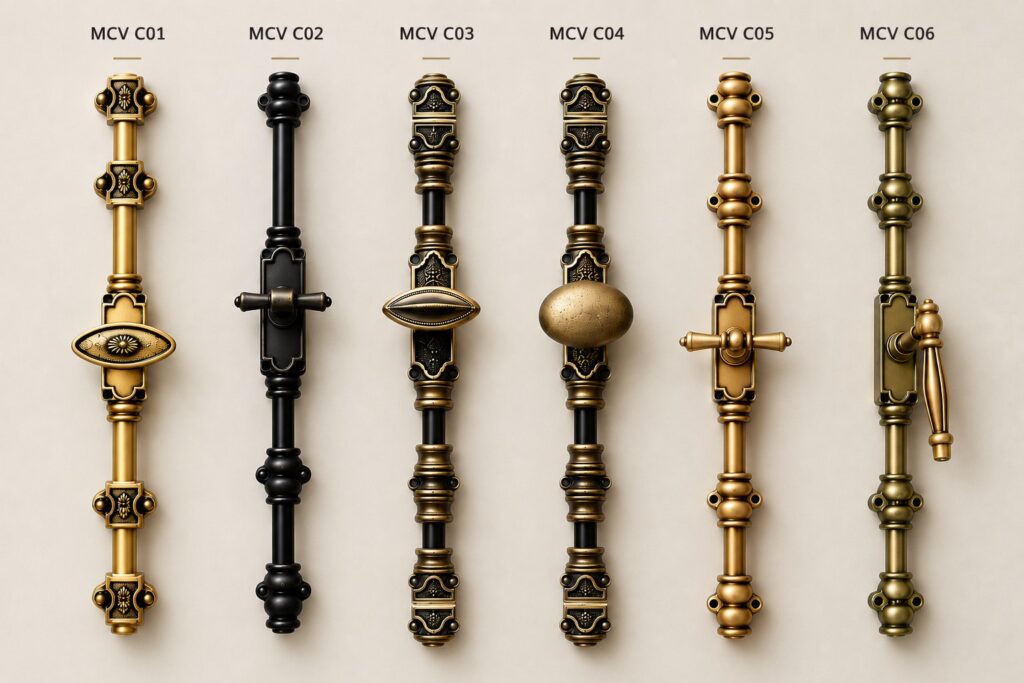
MCV C01 – C06 espagnolettes
Six espagnolette designs, in brass, bronze and black finishes, with roses and levers of different shapes. They are chosen by the design of the joinery and by the finish of the rest of the hardware.

On a building of architectural value the joinery is not replaced: it is remade. The mouldings, the proportions and the division of the leaves are part of the appearance of the façade, and a successful intervention is one that goes unnoticed.
We reproduce the existing joinery in laminated timber, to order, starting from the elements on the building. We work on refurbishments, restorations and listed buildings.
About the product
The first step is the survey: we measure the actual openings, record the existing mouldings, note the division of the leaves, the hand of opening and the way the joinery sits in the masonry. Everything that can be reproduced is reproduced.
On the basis of these elements we prepare the shop drawings and make them available to the architect or the designer, before the assembly goes into production. Where the work needs consent, the drawings are the starting point for the discussion.
Special shapes are part of the job, not an exception: arches, fixed lights, unusual dimensions and large assemblies are made to the actual geometry of the opening.
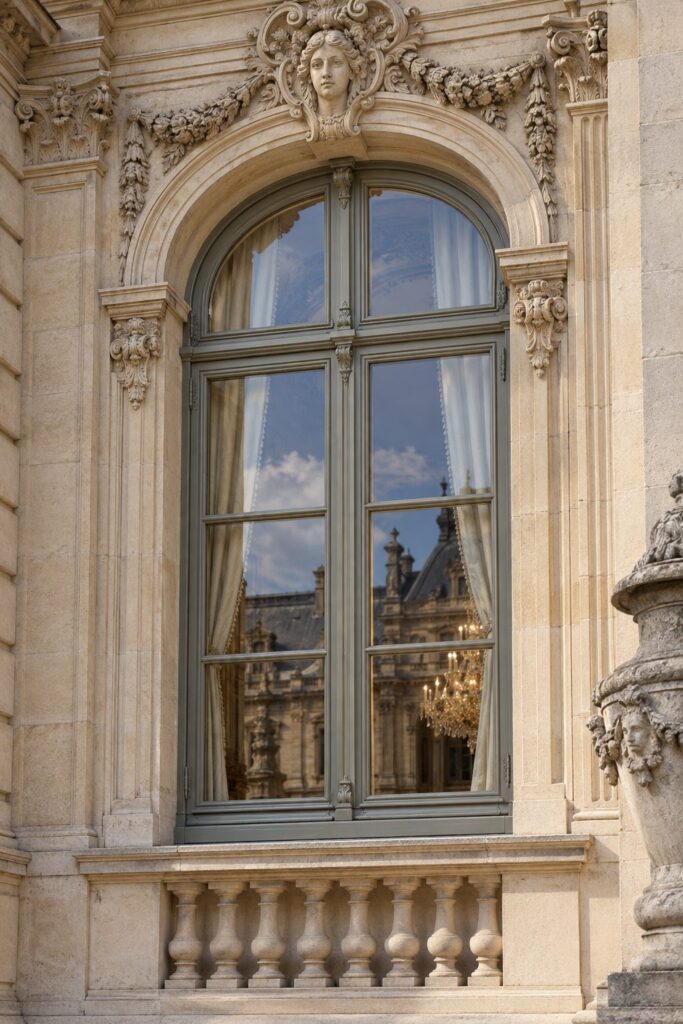
Completed project
On a building of architectural value, the new window has to repeat what was there: the proportions of the opening, the division of the leaves, the width of the frame and the pattern of the mouldings. We work from the elements on the building, not from a catalogue profile.
The glazing bars, the decorative elements, the hardware, the glazing make-up and the finish are settled for each project, according to what has to be reproduced and to the architect’s requirements.
Benefits
The mouldings and the proportions are reproduced from the existing joinery, not approximated with a catalogue profile.
The division of the leaves and the solid-to-void ratio are what give the building its character. They are kept.
Arches, fixed lights and unusual openings are resolved in production, to the actual dimensions.
We prepare the technical details for each type of joinery, before manufacture.
We work directly with the architect or the designer of the project throughout.
The joinery is made in our own factory, so changes to the design do not depend on an outside supplier.
Applications
How we work
Every heritage job is treated individually.
The profile, the geometry of the joinery, the sections, the division of the lights, the glazing bars, the hardware, the glazing and the finishes are settled for each individual project, according to the original elements and to the architectural requirements that have to be respected.
We assess it for each project
Hardware and fittings
On a heritage building the hardware is visible and is part of how the window looks. We produce our own range of decorative pieces, with MCV codes, which we fit on timber joinery — not only on heritage work.
The espagnolette is the vertical bar on the leaf, with rods running up to the head and down to the sill. Depending on the configuration of the joinery, it can be functional — that is, it actually locks the window, through those rods — or it can be fitted decoratively, over concealed modern hardware. The decision is taken at design stage, together with the type of opening.
Six espagnolette designs, in brass, bronze and black finishes, with roses and levers of different shapes. They are chosen by the design of the joinery and by the finish of the rest of the hardware.
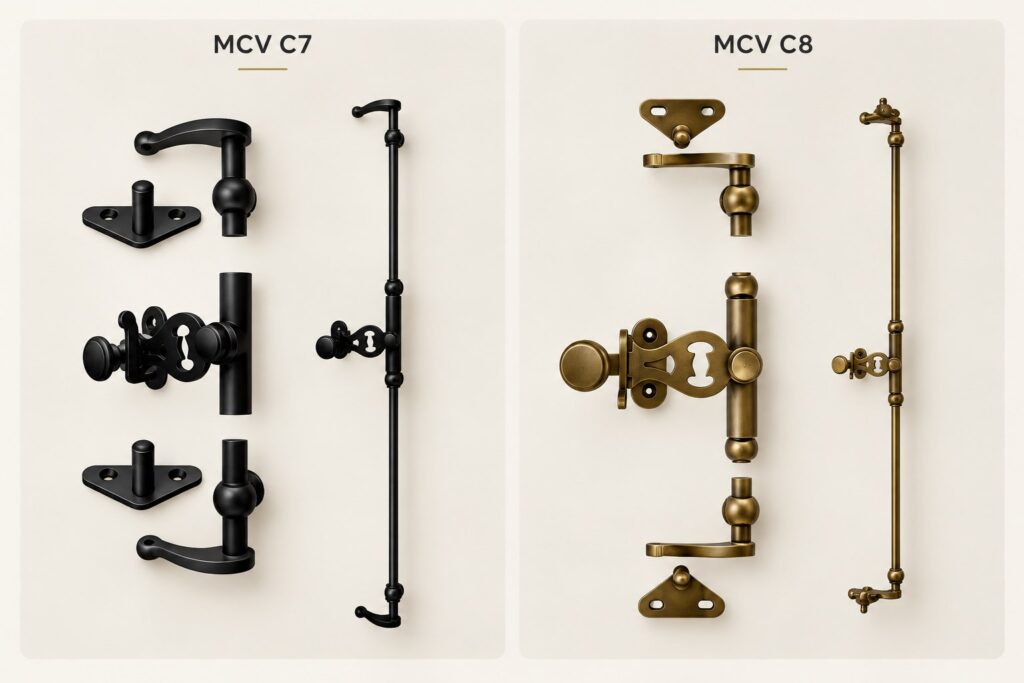
The complete set for an espagnolette: the lever, the rose with a keyhole, the rod supports and the rod itself, supplied in the same finish. C7 in black, C8 in patinated brass.
The handle is chosen together with the espagnolette and the hinges, so that the window and the door read in the same register.
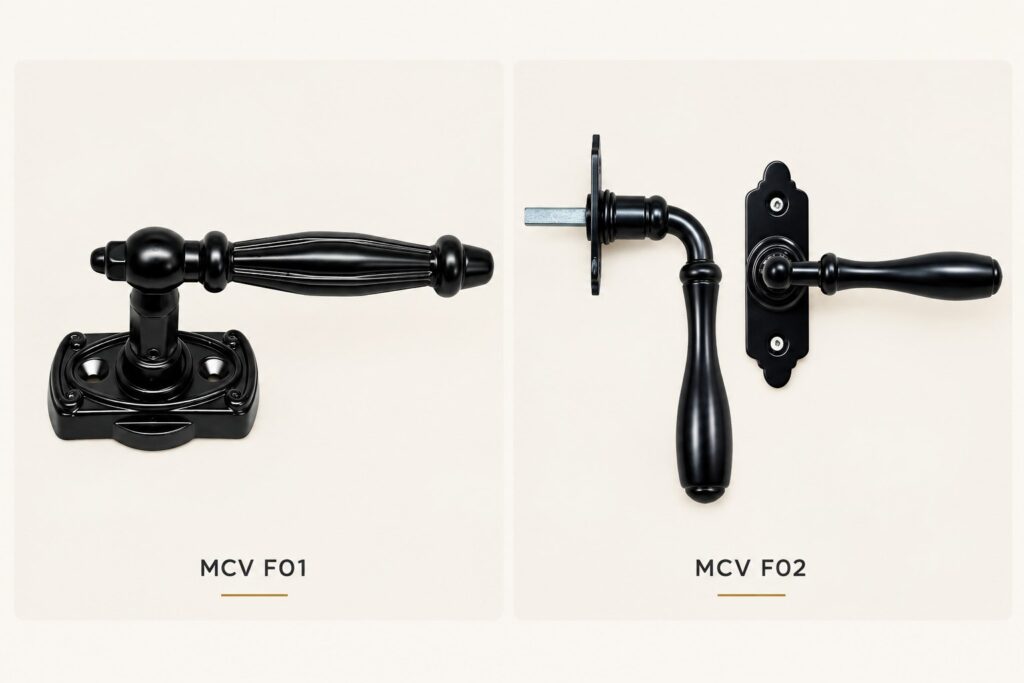
Handles with a classic design and an operating spindle, for timber windows. F01 with an ornamental rose, F02 with an elongated backplate. They are fitted to the window hardware and operate it.
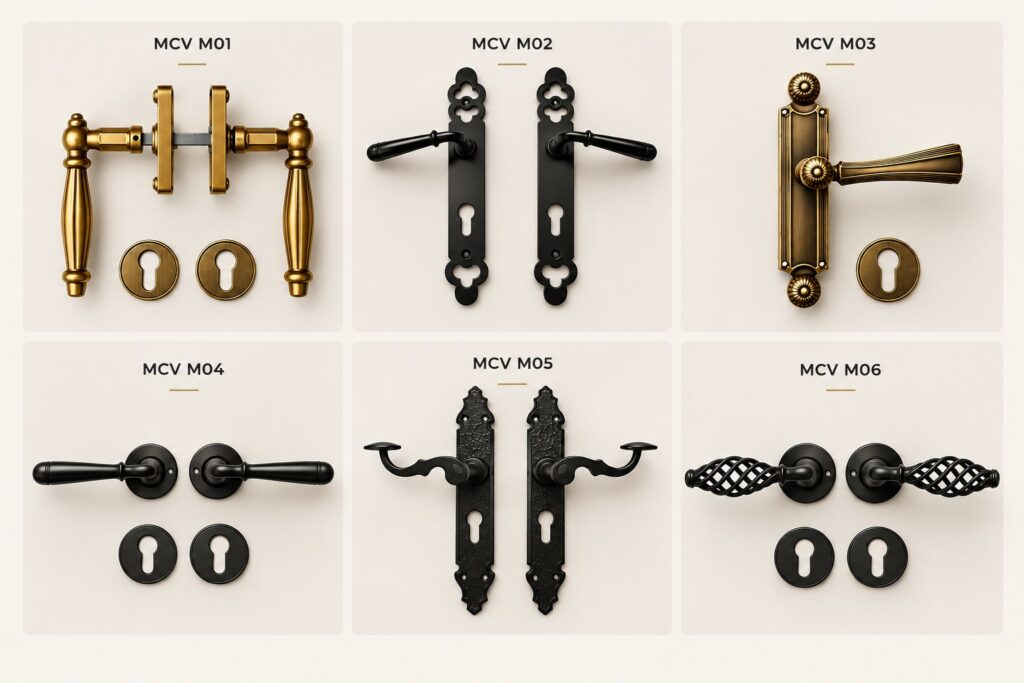
Six door handle sets, with a long backplate or a rose, in brass, patinated bronze and black. They are chosen together with the door lock and the type of cylinder.
On old joinery the hinge was visible and worked. Our range keeps that design.
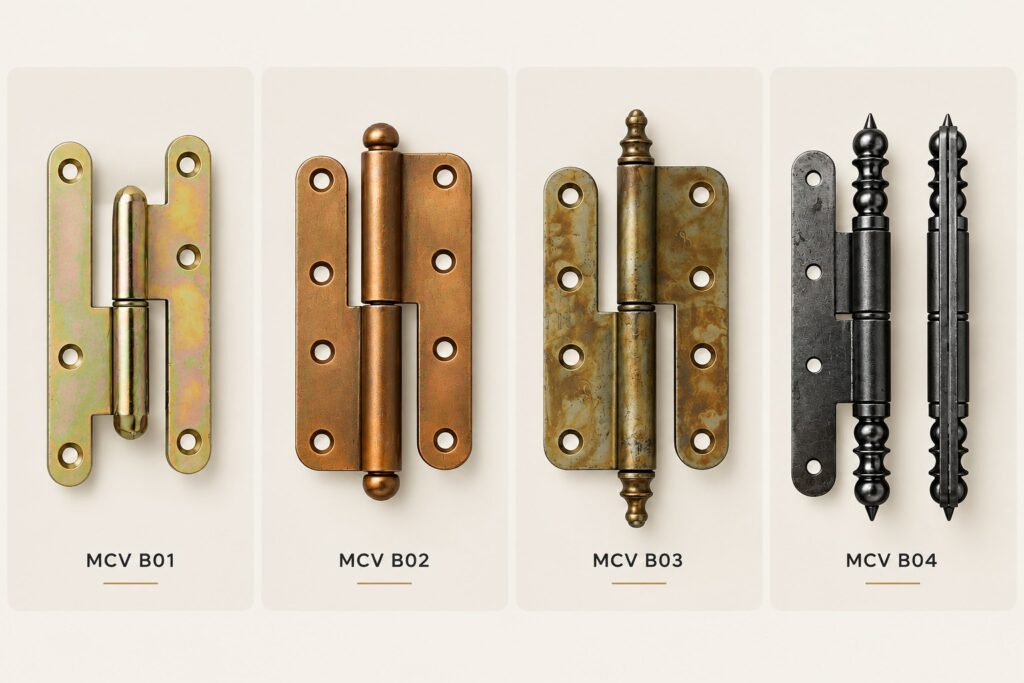
Visible hinges, with an ornamental pin. B01 galvanised, B02 and B03 in bronze and patinated brass tones, B04 in wrought black, with a shaped pin. They stay on show on the edge of the window, so they are part of how it looks.
The MCV codes above belong to our decorative range and can be used on any timber joinery, not only on heritage work. The exact finish, the size and the combination of pieces are settled at order stage, together with the configuration of the window.
Technical documentation
The detail sections — head, centre and sill junctions — are not published on the site. We send them on request, for the configuration you are interested in.
Gallery
The gallery for this product is being added to.
Photographs of completed jobs are still to be added here. In the meantime you can see the projects we have delivered in the portfolio.
See the portfolioNext step
Send us photographs of the existing joinery and the dimensions of the openings. We will come back with a proposal for reproduction.
Request a quoteContinuous