Timber moves. The hardware has to be adjustable to follow it.
An IV68 laminated timber window moves with the humidity in the air, and its sash is heavier than a PVC one of the same size. That is why three things matter in the hardware: the load capacity of the hinge, the ability to adjust on three axes, and corrosion protection.
For timber joinery we work with Roto hardware. Below are the components we use routinely, with what the manufacturer declares for each. This is not a complete catalogue of codes: the exact code is settled at order stage, according to the size of the sash, the glazing unit and the security class required.
In a timber window the hardware works in a material that moves with humidity. That is why the adjustment, the load capacity of the hinge and the corrosion protection matter, not just the number of locking points.
Roto
Roto NX
The tilt and turn hardware system we use on timber joinery. The manufacturer describes it as a modular system, with components that are compatible with one another, for surface-mounted and concealed hinges, on timber, PVC and aluminium profiles.
Characteristics
Burglar resistance to RC 2 even in the tilted position, with the TiltSafe components
RC 3 possible in the closed position, with steel security keeps
Hardware certification to EN 13126-8:2017, class H3 — 20,000 cycles
Roto Sil surface, corrosion protection class 5 to DIN EN 1670
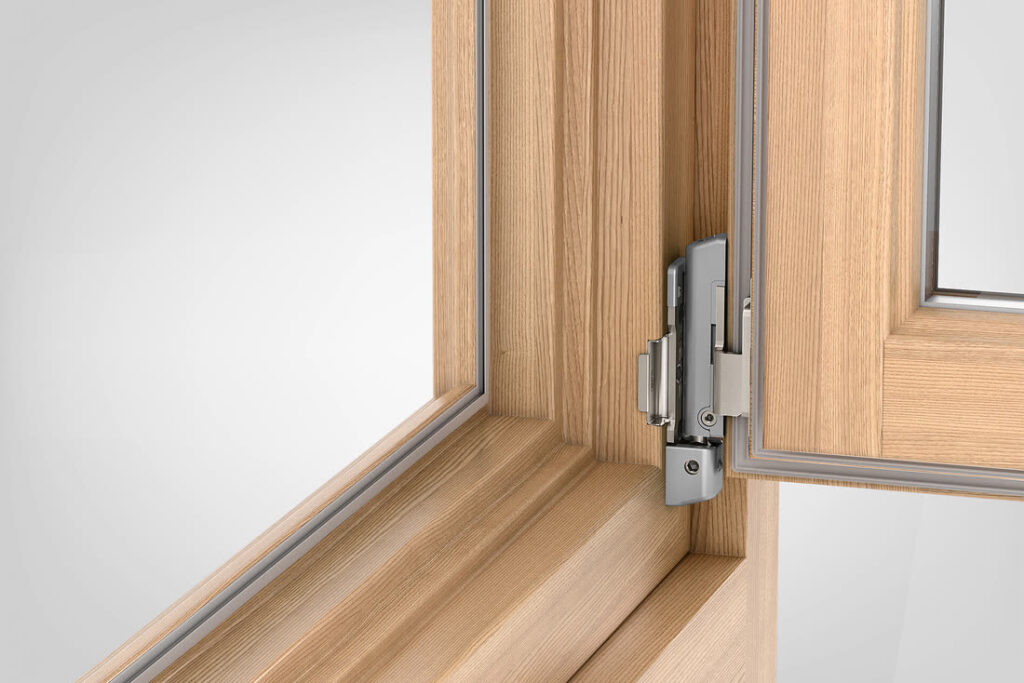
The surface-mounted hinge stays visible on the edge of the window, adjusts easily and carries the heaviest sash weights in the range. It is the natural solution on timber joinery, where the sash is heavy and the profile has no chambers for concealed hardware.
Roto
Roto NX | T hinge — surface-mounted hinge for timber
The standard surface-mounted hinge in the Roto NX system, for timber windows.
Characteristics
Sash weight of up to 150 kg, on timber profiles
The manufacturer presents it as a solution with enhanced security, thanks to its high-performance components
A timber entrance door has the heaviest leaf of any joinery. The hinge is chosen by its actual weight, not by the size of the opening, and the type — surface-mounted 3D or cylindrical — also decides how the closed door looks.
Roto 3D hinges
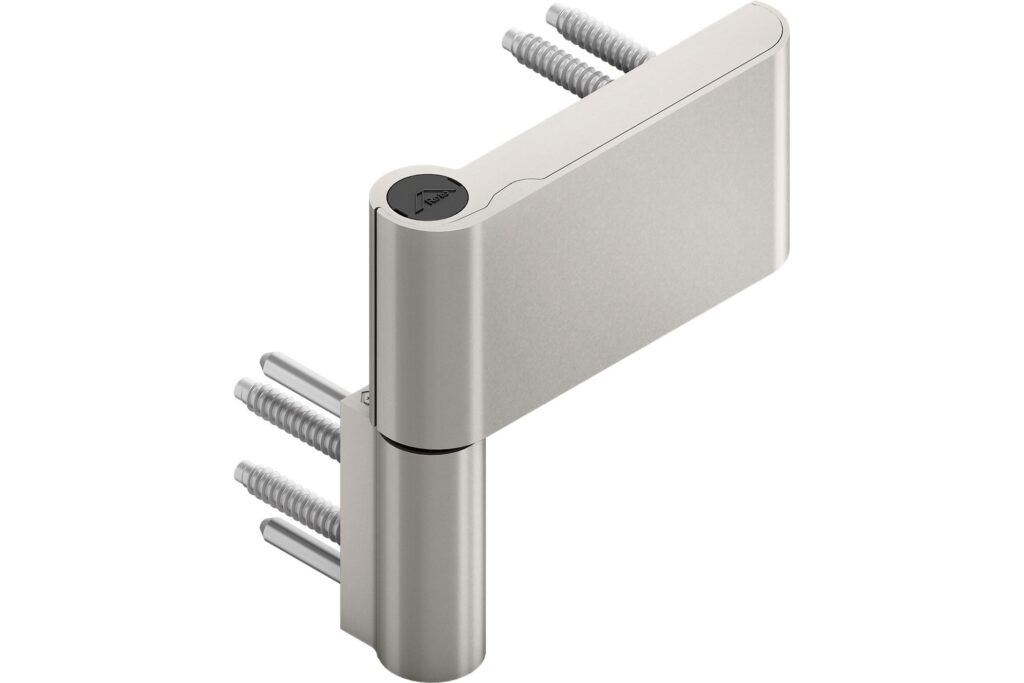
They are fitted over the frame and over the leaf, visible on the edge of the door. They adjust in all three directions, including after installation, without taking the door off — which matters with timber, which moves with humidity.
Roto
Roto Solid S | 117 NN
A two-part surface-mounted hinge for entrance doors. The body is in extruded aluminium, with a self-lubricating bush and a removable pin, which makes fitting and maintenance simple.
Characteristics
Doors up to 160 kg
Timber or PVC frame and sash
Lateral adjustment ±5 mm, height +4 / −1 mm
Pressure adjustment ±0.75 mm, plus ±0.75 mm from the eccentric
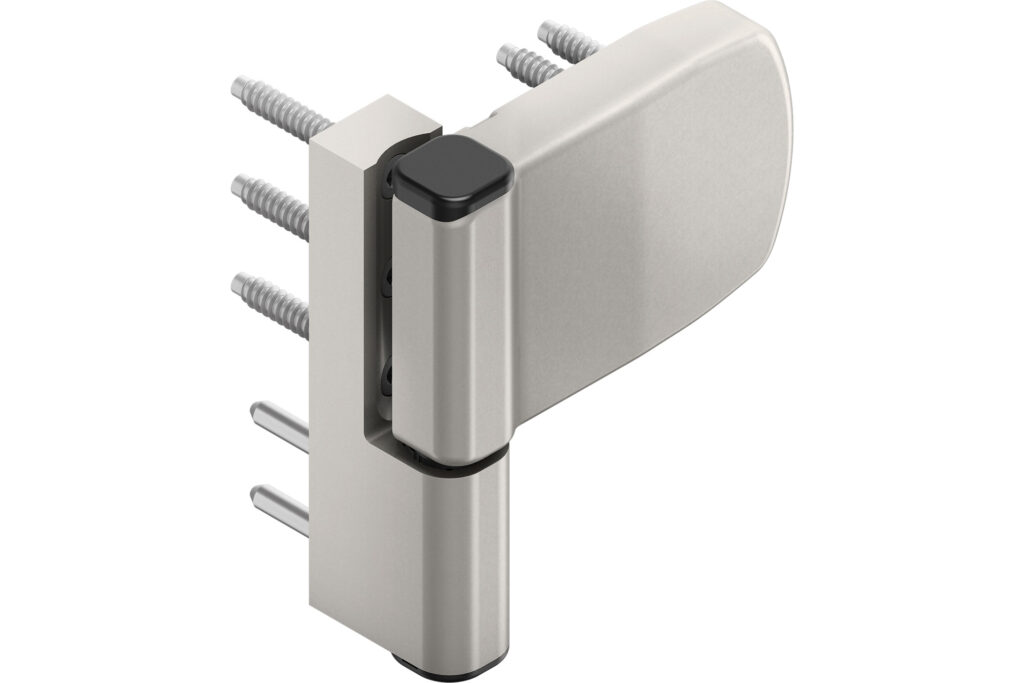
The same capacity, but with a pin that can be fitted from either direction. It is the version to choose when the space between the leaf and the head is small and the hinge has to be fitted or removed in place.
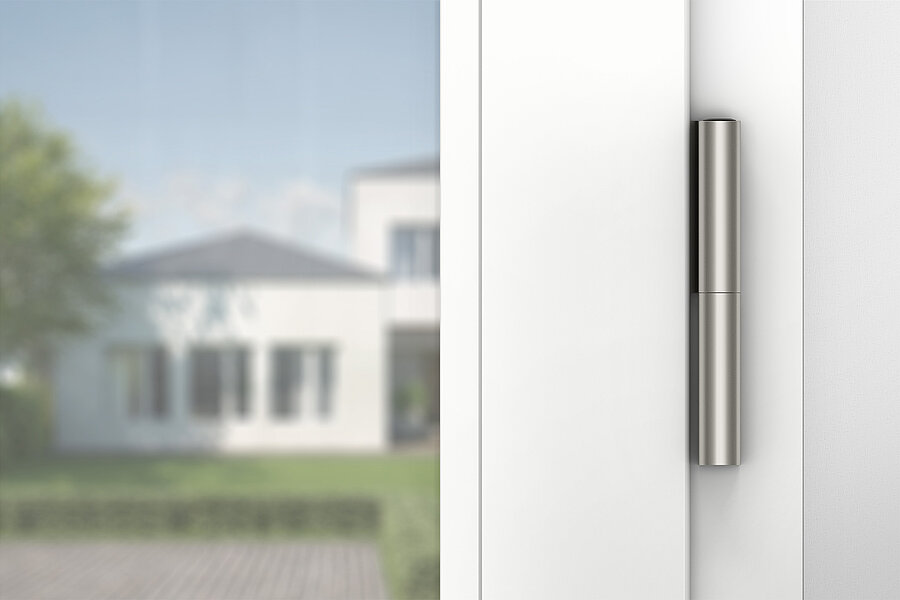
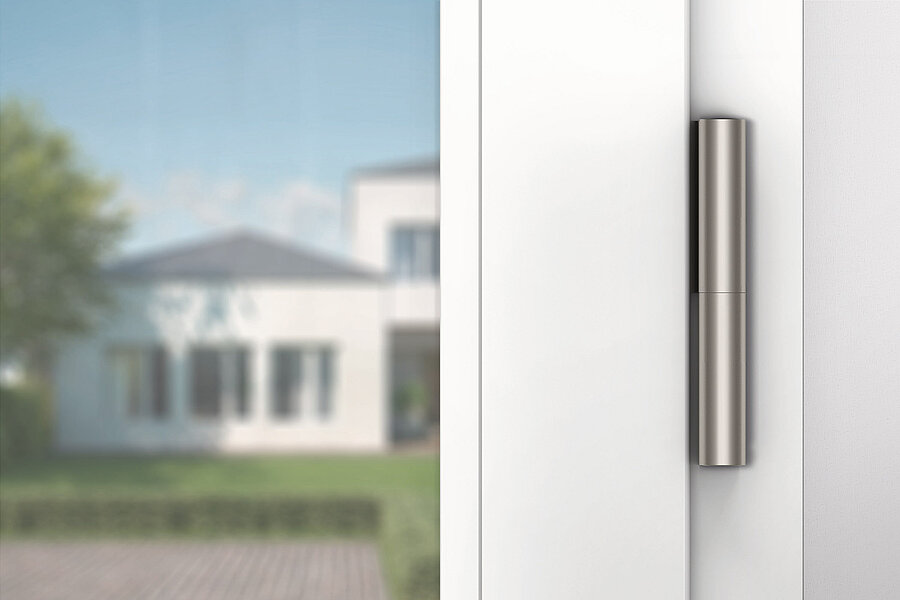
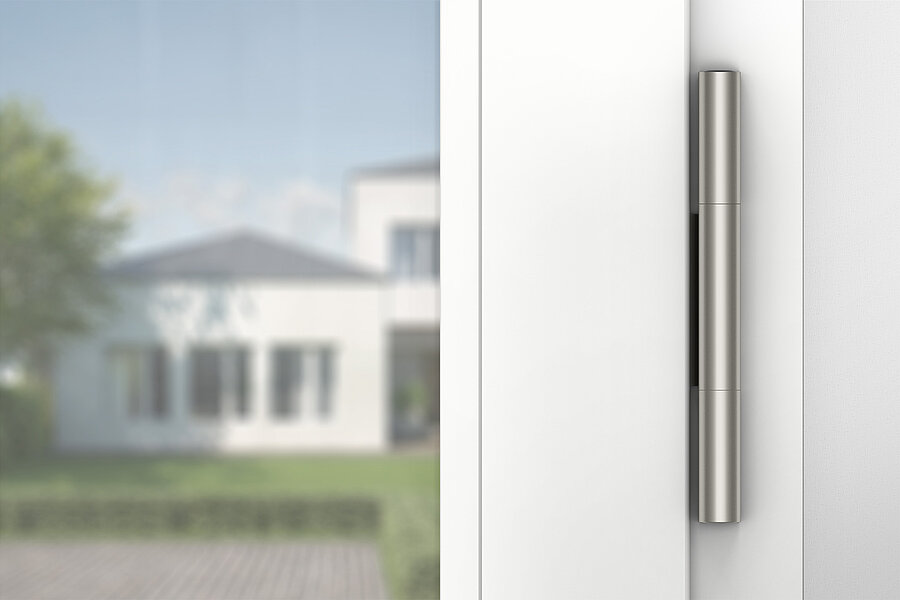
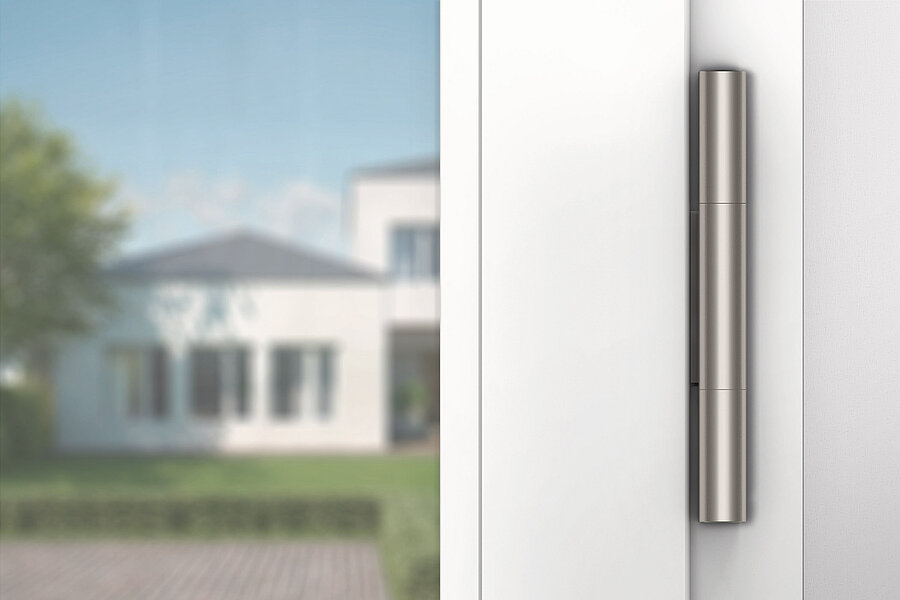
All that shows on the edge of the door is a slim cylinder, and the adjustment is hidden inside the roller. They are chosen when the door has to stay visually clean, with no exposed parts on the frame and the leaf. All four are declared by the manufacturer for timber, PVC and aluminium doors.
Roto
Roto Solid B | 218 P
A two-part cylindrical hinge, 18 mm in diameter. It is the entry step in the range: suitable for ordinary entrance doors, with a leaf of medium weight.
Characteristics
Doors up to 80 kg
18 mm diameter, two-part construction
Timber, PVC and aluminium doors
Lateral adjustment ±3 mm, height +4 / −2 mm, pressure ±1.5 mm
Rebate fitting (16, 20 or 24 mm hardware groove) or face fitting
CE marking to DIN EN 1935:2002, hinge class 11; ift certification to QM 343
200,000 opening cycles to DIN EN 1935 and DIN EN 1191
Corrosion resistance class 5, to DIN EN 1670
Finishes: various RAL colours and metallic surfaces
The same two-part construction, with a thicker, 22 mm roller. The increase in diameter brings one more weight step and makes the hinge usable on RC 2 class doors.
Characteristics
Doors up to 120 kg
22 mm diameter, two-part construction
Timber, PVC and aluminium doors
Lateral adjustment ±3 mm, height +4 / −2 mm, pressure ±1.5 mm
Suitable for RC 2 burglar-resistant doors; SKG** certification
CE marking to DIN EN 1935:2002, hinge class 13; ift certification to QM 343
200,000 opening cycles to DIN EN 1935 and DIN EN 1191
Corrosion resistance class 5, to DIN EN 1670
Finishes: various RAL colours and metallic surfaces
The top of the cylindrical range: three parts and a 22 mm roller. It is the hinge for heavy doors, with a solid leaf or generous glazing, including burglar-resistant doors.
Characteristics
Doors up to 160 kg
22 mm diameter, three-part construction
Timber, PVC and aluminium doors
Lateral adjustment ±3 mm, height +4 / −2 mm, pressure ±1.5 mm
Suitable for RC 2 burglar-resistant doors; SKG** certification
CE marking to DIN EN 1935:2002, hinge class 11 in the rebate or 12 face-fitted; ift certification to QM 343
200,000 opening cycles to DIN EN 1935 and DIN EN 1191
Corrosion resistance class 5, to DIN EN 1670
Finishes: various RAL colours and metallic surfaces
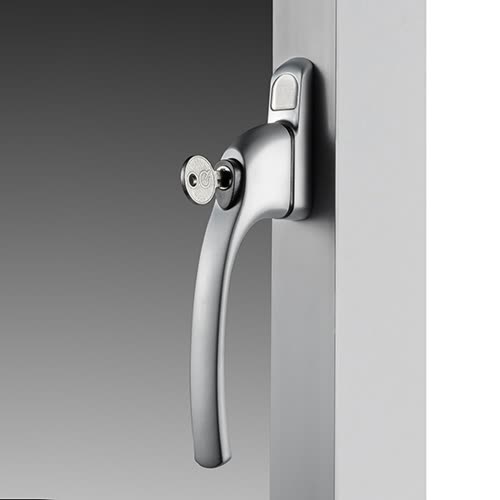
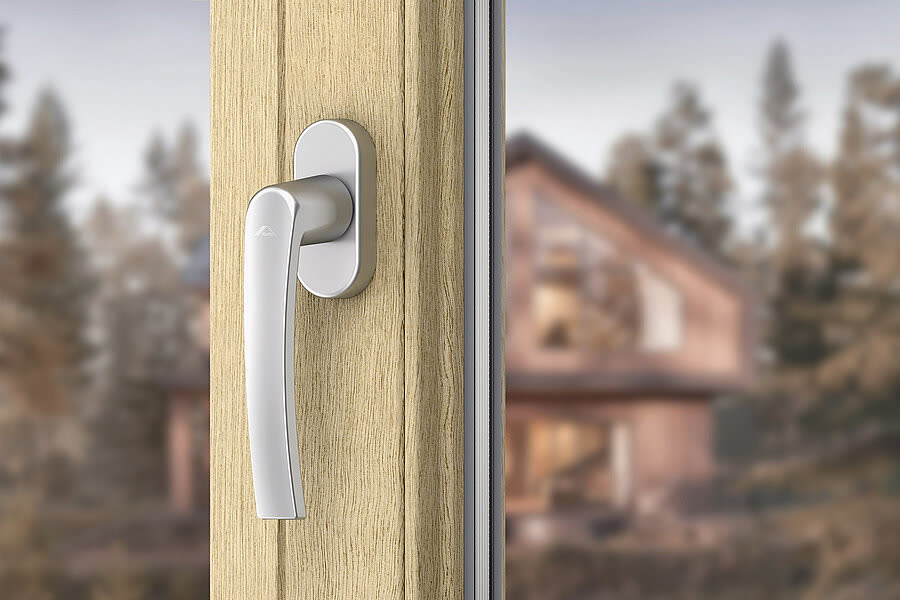
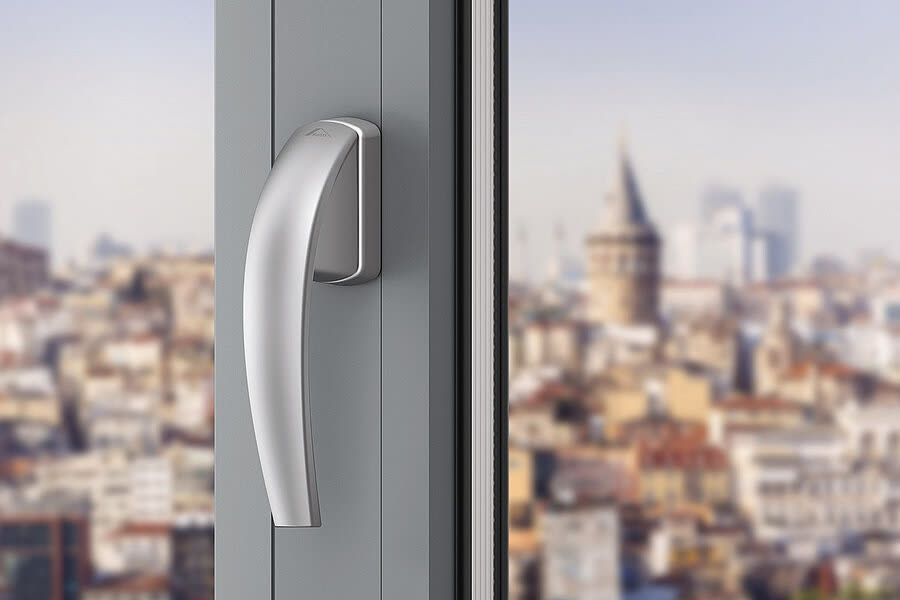
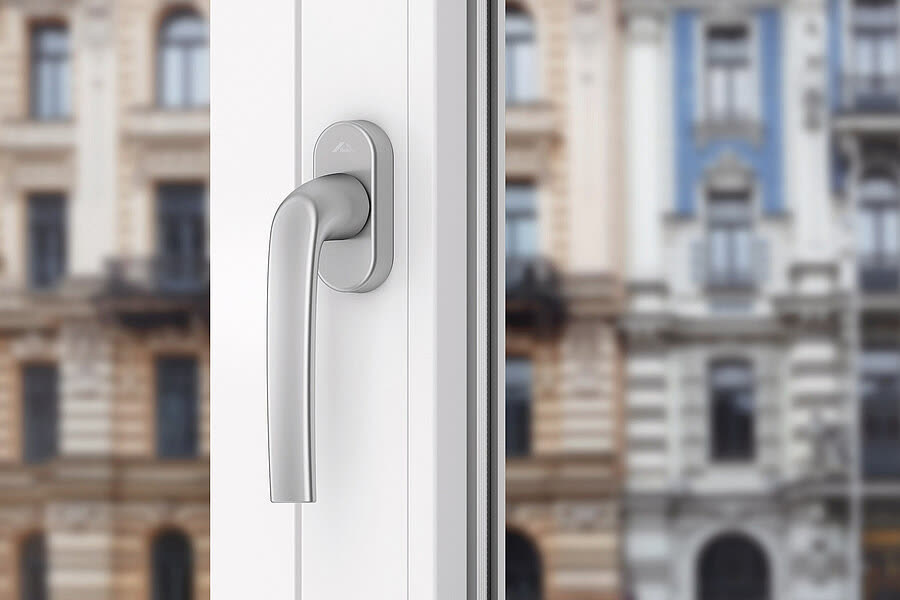
The handle is the one piece of hardware the client touches every day. It is chosen for its design, but also for the level of security required: plain, lockable or with push-to-lock.
greenteQ
greenteQ — window handles
The greenteQ range of window handles, developed by VBH. We use it as an alternative when a particular finish or a level of security is required that the base range does not cover.
Characteristics
Versions in aluminium, stainless steel or die-cast zamak
A standard version, a lockable version and a push-button version, of the TBT type
The range also includes sets for balcony doors and for roller shutters
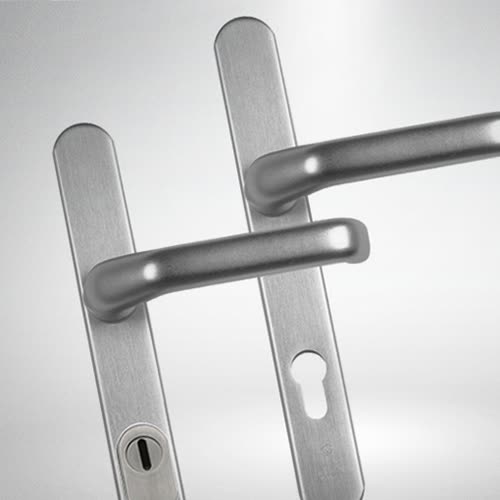
The greenteQ door handle sets, for the house entrance door, the flat door and internal doors. They are chosen together with the lock, because the level of security is declared for the assembly.
Characteristics
Lever handle sets for house doors, flat doors, room doors and communal doors
Several versions, materials and finishes within the same line
The range also includes the Alpha 2-Star security set, for entrance doors
The classic handle line. The manufacturer describes it as having RAL-certified technology for long-term operation, with aluminium components and a harmonious line.
Characteristics
Suitable for tilt, tilt and turn, tilt-and-slide, lift-and-slide and bi-fold systems
Also suitable for outward-opening windows, on timber, PVC and aluminium profiles
Seven handle versions, for different requirements of security and comfort
The range includes six handle sets for balcony and terrace doors
Variants
A basic handle, with no extra functions
With a key cylinder for opening and closing — basic security, suitable as child safety
With a key cylinder, developed for burglar resistance to DIN 18104-1; it locks the window closed or tilted by pressing the cylinder
With a concealed device against operation from outside, a self-locking mechanism and security bolts
With a button: the hardware cannot be forced from outside, and the window is only operated with the button pressed
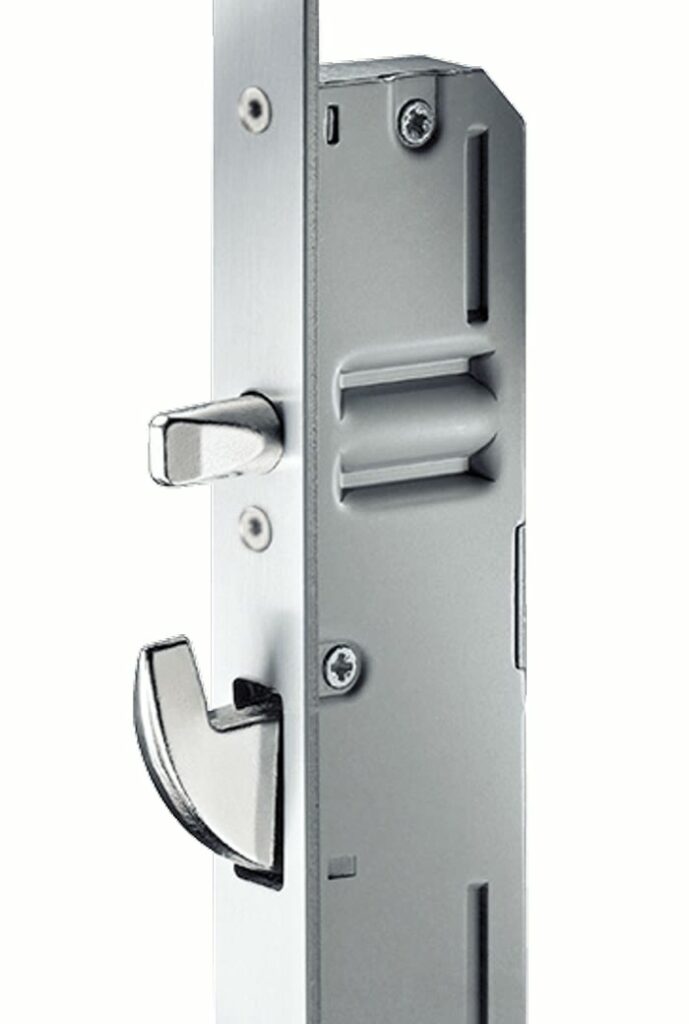
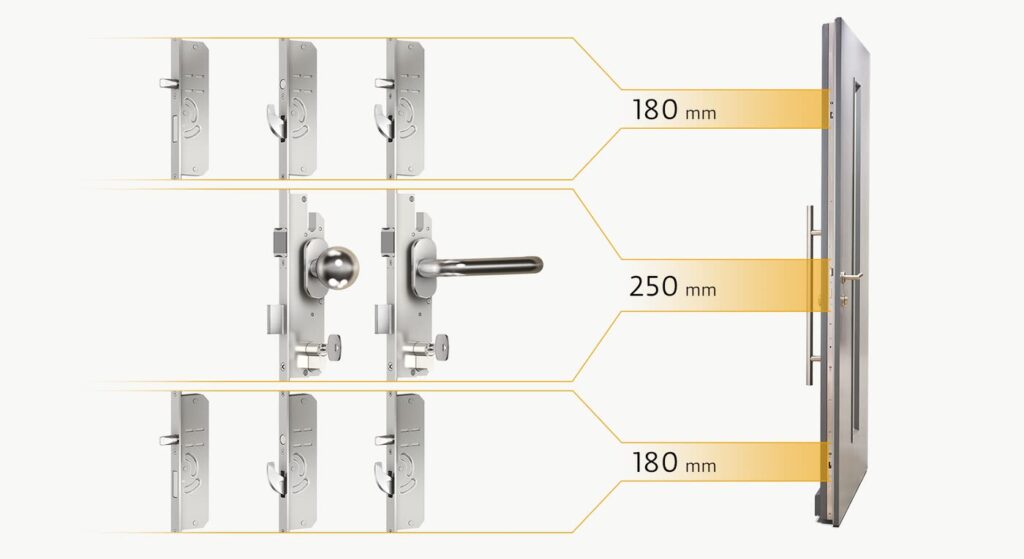
“Multipoint lock” says nothing yet about how the door is held in its frame. The difference is made by the parts fitted on the locking bar — deadbolt, straight bolt or hook — and by the combinations between them. Below are the types SIEGENIA publishes for the KFV range, each with its image.
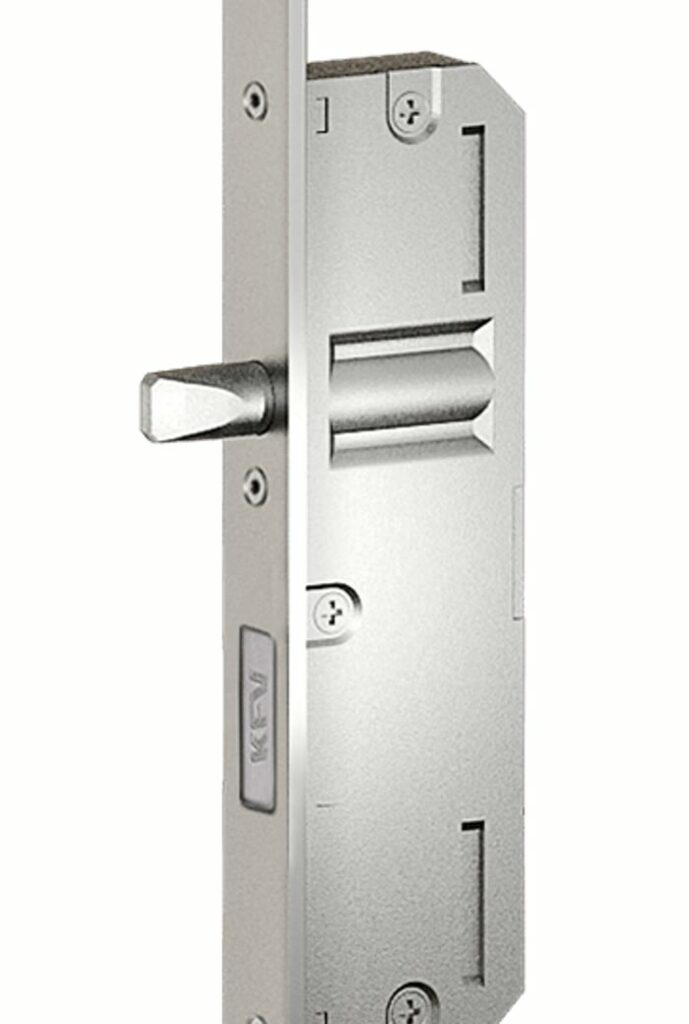
The main deadbolt and the latch
The deadbolt is the part that locks the door into the frame when you turn the key; the latch is what keeps the door shut between uses, without locking it. On every KFV ONE multipoint lock the latch is of the softlock type, meaning it enters the frame smoothly and silently.
What it means The deadbolt alone gives no burglar resistance class: it locks the door at one point. The additional points — the bolts and hooks below — are what stop the leaf being forced along its height.
AS 4340 series
Straight steel bolt
The round steel bolts make the door harder to lever and so thwart attempts at forced entry.
What it means The bolt enters the keep in the frame straight on. It holds very well against pushing and striking, but it does not draw the leaf towards the frame — so it adds no pressure on the gasket.
AS 4540 series
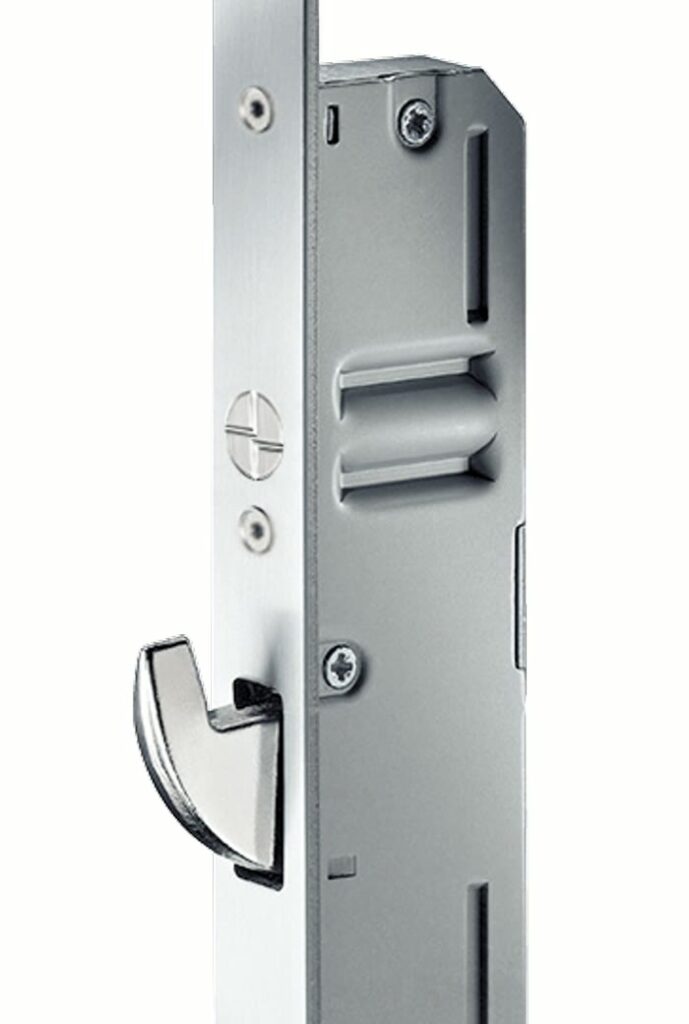
Swing hook bolt
The tapered hooks prevent the door leaf being levered out of the frame and provide high thermal insulation and an optimal seal.
What it means The hook swings out as the door locks and catches behind the keep. Because it is tapered, it draws the leaf towards the frame as it engages: that is where the constant pressure on the gasket and the resistance to being pulled out come from.
AS 4640 series
Bolt and hook together
This combination offers maximum security: the round steel bolts make the door harder to lever, and the hooks prevent the leaf being pulled out.
What it means The version we ask for on entrance doors with a security requirement: each type of element covers a different mode of forcing, and the hook maintains the seal as well.
AS 4100 series
Adjustable mushroom bolts
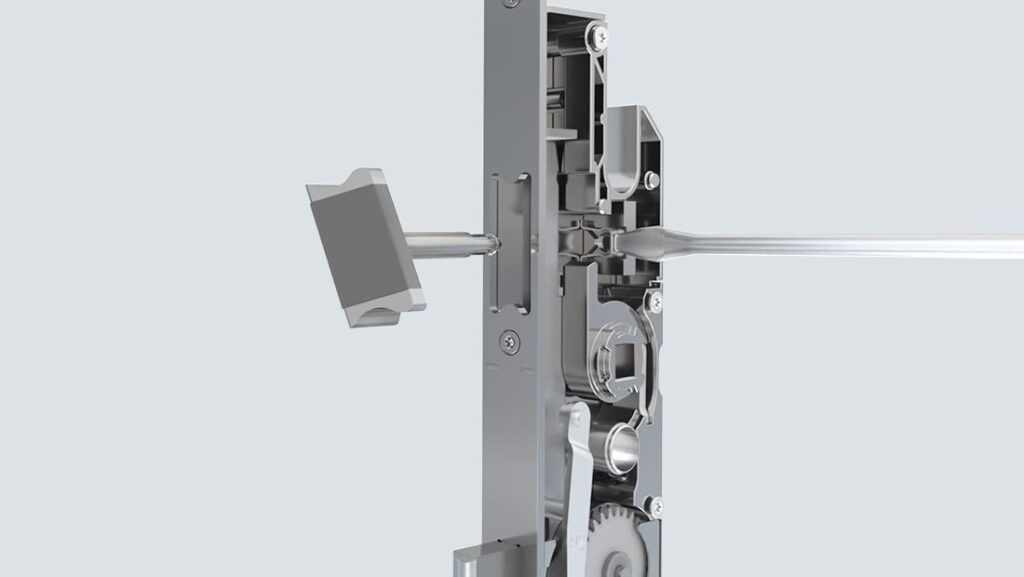
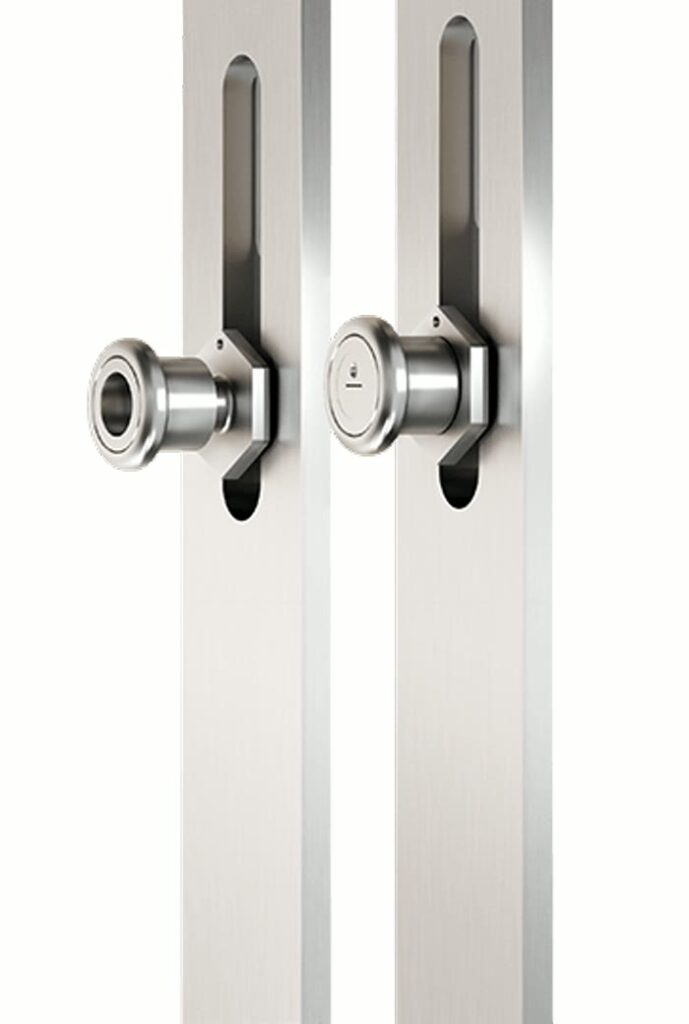
A particularly smooth, low-maintenance multipoint lock, with self-adjusting mushroom bolts that also adjust for height and engage behind the parts in the frame.
What it means The mushroom head engages behind the keep, as in window hardware. It adjusts for height, so it compensates over time for the leaf settling.
The images and series names are those published by SIEGENIA for the handle-operated KFV multipoint locks, where the manufacturer shows each type of element separately. The key-operated version, KFV ONE, uses the same types of element, but their number and position on the leaf depend on the configuration — which is why we do not fix them here. The exact combination and the codes are settled at order stage, together with the security class required, and recorded in the project documentation. Official SIEGENIA page ↗
Timber hardware
Security and comfort
Components you do not see, but which change the way a window is used. They are settled before manufacture, because they belong to the hardware, not to later accessories.
SIEGENIA
SIEGENIA KFV ONE — key-operated multipoint locks
The modular generation of KFV multipoint locks, operated from the cylinder. It is used where the door is locked with the key, not automatically on closing. The exact configuration of the locking points is settled together with the security class required.
Characteristics
A modular system, with uniform dimensions and product families that combine freely
A smooth-closing softlock latch, fitted as standard in every main lock case
An improved hook profile, for greater burglar resistance
Uniform fixing positions for every multipoint lock, with a single routing dimension
Burglar resistance up to class RC 3
Distances from the axis: 25 – 100 mm
Cylinder centres: 72, 85, 88 and 92 mm for the profile cylinder; 74 and 94 mm for the Swiss round cylinder
Backplates from the 16 mm flat version to the 10 × 30 × 10 mm U profile
To DIN EN 14351, tested and classified to DIN EN 1627 – 1630
The “tilt before turn” mechanism. It reduces the risk of a window opening fully when it should not — useful in public buildings and wherever there are children.
Characteristics
It prevents the window from opening fully while the handle is locked
The tilted sash locks when the handle is in the horizontal position
The version with a long handle, placed at the foot of the sash. We propose it for tall windows and for situations where a handle at the usual height cannot be reached.
Characteristics
Lever function and an integrated forced-operation system
The window tilts and opens more easily than a standard one
In timber the sash is heavier than in PVC for the same area. We calculate it from the size and the glazing unit, then choose the hinge — T hinge or Power Hinge.
The security class
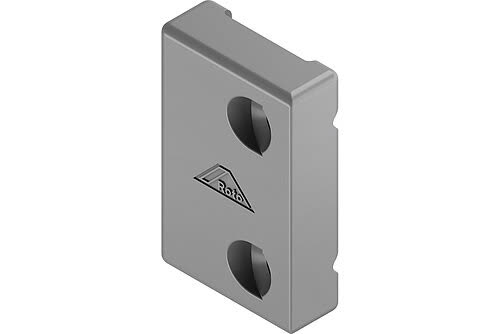
RC 1 N, RC 2 or RC 3 come from the assembly: steel keeps in the frame, enough locking points and a handle of the matching class. The level is settled before manufacture.
Adjustment over time
Timber moves with humidity. The surface-mounted hinge adjusts on three axes and stays accessible after installation, which matters at the first service.
The right handle
Plain, lockable or with a button. On ground floors and on windows reachable from outside we recommend the locking version, tested to DIN 18104-1.
The finish of the hardware
The colour of the hinges and handles is chosen together with the finish of the timber, so that the whole reads as one.
Corrosion protection
The Roto Sil surface is declared at class 5 to DIN EN 1670. It matters on exposed windows and in areas with salt air.
A professional note
The burglar resistance class belongs to the assembly, not to a component
A window does not become RC 2 because it has a lockable handle. The class comes from the combination of profile, glass, hardware and installation, and is declared for the assembly tested. All the values on this page are those published by the hardware manufacturer for its own components; the performance of the finished window is established on the configuration actually ordered.
The exact component codes are not published here because they depend on the size of the sash and on the level of security required. We settle them at quotation stage and record them in the project documentation.
On an ordinary visit, this site places no cookies of its own and uses no traffic analytics, advertising or tracking. We ask for your consent only for content hosted by others — the map and the virtual tour — because it transmits your IP address to the provider.
A single cookie, mcv_cookies, which remembers the choice you make on this screen so that we do not have to ask again on every page. It is kept for six months and stays on this site. The other cookies in this category appear only for those who log in to the administration area of the site.
The Google map on the contact page and the Matterport virtual tour on the home page. If you accept, they load by themselves and may place their own cookies. If you refuse, they stay blocked, and in their place you see a button you can press at any time, for that one piece of content only.
We have no analytics, advertising or social media categories, because the site uses no such tools. If they ever appear, they will appear here too, with the toggle switched off.